
"enzyme process"
600 article(s) found

Coffee Roasting Hot Air Roaster
Coffee roasting refers to the heating of raw beans to convert starch in raw beans into sugar and acidic substances at high temperature. Cellulose and other substances will be carbonized to varying degrees. Moisture and carbon dioxide will volatilize. Protein will be converted into enzymes and fats. The remaining substances will combine together to form an oil film layer on the surface of coffee beans. In the process, coffee acids will be generated.

Coffee bean roasting technology hot air roaster
Coffee roasting (coffee roasting) means that through heating raw beans, starch in raw beans is converted into sugars and acids at high temperature, substances such as cellulose will be carbonized to varying degrees, water and carbon dioxide will be volatilized, proteins will be converted into enzymes and fats, and the remaining substances will be combined to form an oil film on the surface of coffee beans, and in the process coffee acids will be formed.
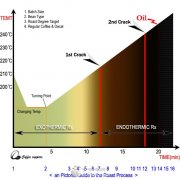
Analysis of roasting process of Coffee
Coffee roasting (coffee roasting) means that through heating raw beans, starch in raw beans is converted into sugars and acids at high temperature, substances such as cellulose will be carbonized to varying degrees, water and carbon dioxide will be volatilized, proteins will be converted into enzymes and fats, and the remaining substances will be combined to form an oil film on the surface of coffee beans, and in the process coffee acids will be formed.

What kind of tea is the tea bitten by insects? the origin story and production process of the name of Taiwan puffing tea Oriental Beauty Tea
Under the condition that the business had been lost, Miss Nikko sent the tea to the tea fair in England alone. She emotionally introduced Oriental Beauty Tea to the outside world at the last shining moment of her and her father, precisely because of the imperfection of tea. The tea that has been attacked by insects has finally become a delicious tea, and the young lady has just entered the business world.
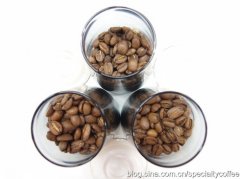
Dried coffee beans
Sun-cured coffee beans are more acidic than water-washed beans, especially aminobutyric acid, but water-washed coffee is often sour in the sun. This is because coffee beans are dehydrated for a long time in the process of sun drying, and enzymes decompose glutamic acid into aminobutyric acid. Although the content of aminobutyric acid in washed beans is lower than that in sun-dried beans, but citric acid, acetic acid and other acid mouth

Why is whole milk easier to make coffee foam?
Milk fat exists in a small crystal ball coated with a thin film of protein and fat, and the film of each crystal ball can prevent the crystal balls from colliding with each other and form a larger fat bubble. In addition, the film protects the crystal ball from being digested by enzymes, making the milk less sweet or not sweet at all. During the heating process, the weight of the protein in the milk increases, making the milk thicker.

Coffee drawing skills whole milk is easier to foam.
Milk fat exists in a small crystal ball coated with a thin film of protein and fat, and the film of each crystal ball can prevent the crystal balls from colliding with each other and form a larger fat bubble. In addition, the film protects the crystal ball from being digested by enzymes, making the milk less sweet or not sweet at all. During the heating process, the weight of the protein in the milk increases, making the milk thicker.

Fine Coffee: why whole milk is easier to foam
Milk fat exists in a small crystal ball coated with a thin film of protein and fat, and the film of each crystal ball can prevent the crystal balls from colliding with each other and form a larger fat bubble. In addition, the film protects the crystal ball from being digested by enzymes, making the milk less sweet or not sweet at all. During the heating process, the weight of the protein in the milk increases, making the milk thicker.
Coffee common sense why whole milk is easier to foam.
Milk fat exists in a small crystal ball coated with a thin film of protein and fat, and the film of each crystal ball can prevent the crystal balls from colliding with each other and form a larger fat bubble. In addition, the film protects the crystal ball from being digested by enzymes, making the milk less sweet or not sweet at all. During the heating process, the weight of the protein in the milk increases, making the milk thicker.

Why is it easier to foam coffee with whole milk?
The fat in milk is contained in small globules coated with a thin film of protein and fat. The thin film on each globular prevents the globules from colliding with each other to form a larger fat bubble. In addition, the membrane protects the pellets from enzyme digestion that would make milk less sweet or not sweet at all. During the heating process, the protein quality of the milk increases and the milk becomes thicker.

Why is whole milk easier to foam?
Milk fat exists in a small crystal ball coated with a thin film of protein and fat, and the film of each crystal ball can prevent the crystal balls from colliding with each other and form a larger fat bubble. In addition, the film protects the crystal ball from being digested by enzymes, making the milk less sweet or not sweet at all. During the heating process, the weight of the protein in the milk increases, making the milk thicker.

Why is whole milk easier to foam?
Milk fat exists in a small crystal ball coated with a thin film of protein and fat, and the film of each crystal ball can prevent the crystal balls from colliding with each other and form a larger fat bubble. In addition, the film protects the crystal ball from being digested by enzymes, making the milk less sweet or not sweet at all. During the heating process, the weight of the protein in the milk increases, making the milk thicker.

Why do sun beans taste different from water-washed beans? Why is honey-treated coffee so sweet?
It has a great influence on the flavor, aroma and mellow thickness of coffee, and it is also an important difference for many people to choose coffee beans. In this paper, let's explore the chemical changes that occur during the treatment process and how these changes affect the flavor in the cup. The flavor and aroma of coffee brought by the origin will develop the flavor and aroma of coffee when roasted, and the aroma compounds will be caused by many chemical reactions.
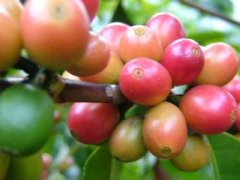
Processing of high-quality coffee beans by wet treatment
The wet treatment process requires more capital investment and more energy, but this method helps to ensure the quality of coffee beans and reduce damage. The main difference between the wet and dry methods is that during the wet treatment, the pulp is immediately separated from the coffee beans instead of drying them. The pulp is separated in this way in a separator with a fixed surface and a moving surface.
The process of making coffee beans how to make coffee beans
Roasting coffee beans is a process in which raw beans are roasted using specific equipment to convert starch into sugars and acids at high temperature. in this process, substances such as cellulose will be carbonized to varying degrees, water and carbon dioxide will evaporate, and the protein will be converted into enzymes, which combine with the rest of the fat to form an oil film on the surface of the coffee, and the coffee bean itself.
The whole process of coffee roasting technology
Coffee roasting (coffee roasting) means that through heating raw beans, starch in raw beans is converted into sugars and acids at high temperature, substances such as cellulose will be carbonized to varying degrees, water and carbon dioxide will be volatilized, proteins will be converted into enzymes and fats, and the remaining substances will be combined to form an oil film on the surface of coffee beans, and in the process coffee acids will be formed.
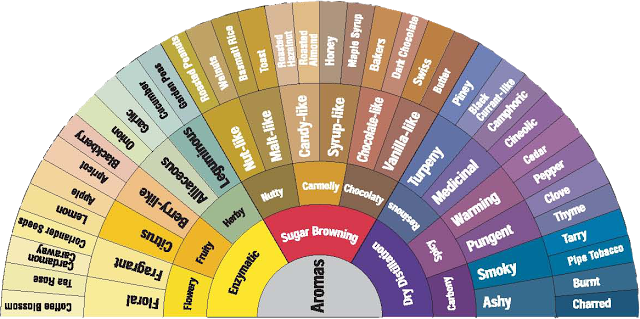
Professional coffee roasting | what fragrance is added by "burning and increasing fragrance"?
For the exchange of professional baristas, please pay attention to the coffee workshop (Wechat official account cafe_style). Since its inception, we have mostly played with foreigners' ideas and baking rhythms, especially Home-barista, Nordic Forum, Scott Rao, Rob Hoos, Cafeculture, WCRC or German SCAE competitions, for no other reason. The information is open enough and the demonstration is easy.

Description of taste and flavor of Panamanian butterfly coffee beans brief introduction of regional varieties
A brief introduction to the taste and flavor of Panamanian butterfly coffee beans there are many ways of washing, but generally speaking, the floating beans are removed after the coffee fruit is picked, then the pulp is removed, and then the coffee beans are soaked in a fermentation trough. The enzymes in the water will soften the mucus attached to the endocarp of the coffee beans, and the natural yeast will break down the sugar in the mucus, a process called fermentation.

Introduction to the quality and characteristics of Musk Coffee
How can such coffee beans smell good? The civet's digestive system has an enzyme that breaks down a lot of amino acids, which give the excreted coffee beans a unique bitterness and aroma. So the flavor of coffee beans after a unique fermentation process is different from that of ordinary coffee beans, because wild civets are obviously better at selecting good coffee fruits.

Ethiopia Yega Chuefei has become the most famous in the world.
Ethiopia Yega Chuefei G2 | EthiopiaYirgachaffe Grade2 Ethiopia Yega Xuefei has a floral scent, making it the most famous boutique raw bean in the world. It is particularly mild, with a floral fragrance, an afterscent around the tip of the tongue, and a gentle texture, all of which have become unique characteristics of Yejia Xuefei. In the past few decades,